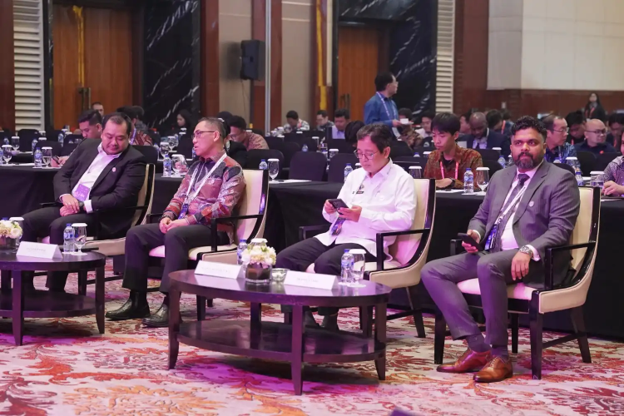
Cybersecurity Events Shaping Indonesia’s Digital Security Landscape
August 27, 2026Indonesia’s accelerating digital economy is creating a broader and more complex cybersecurity environment. Cloud adoption, digital payments, mobile services, connected infrastructure, artificial intelligence, and large-scale data systems are expanding the attack surface for organizations across financial services, government, healthcare, telecommunications, retail, and other sectors.
Against this backdrop, best cybersecurity events can provide more than general industry networking. Well-structured gatherings give security leaders opportunities to examine emerging threats, compare defensive approaches, understand regulatory developments, evaluate technologies, and exchange operational experience with peers facing similar challenges.
Why Cybersecurity Events Matter for Security Leaders
Cybersecurity decisions increasingly involve business continuity, regulatory accountability, data protection, and organizational resilience rather than technology alone. Security executives need to understand how threat intelligence, identity controls, cloud protection, incident response, and governance work together across increasingly interconnected environments.
Industry events can bring these considerations into a single forum. Expert presentations, technical discussions, case studies, demonstrations, and peer conversations can help security professionals identify practical approaches while evaluating how new technologies fit within existing security architectures and budgets.
Executive Cybersecurity Strategy
Security leaders must connect cyber risk with business priorities and operational continuity. Executive-level discussions can help organizations establish investment priorities, clarify accountability, and develop security programs that remain aligned with changing business requirements.
CISO Leadership
The modern CISO increasingly participates in enterprise-level decisions involving risk, compliance, technology, and resilience. Peer discussions can provide insight into managing security teams, communicating risk, and establishing measurable security objectives.
Security Investment
Cybersecurity budgets must address multiple competing priorities, including prevention, detection, response, recovery, identity, cloud security, and workforce capability. Industry dialogue can help leaders compare approaches to allocating limited resources.
Risk Governance
Effective governance establishes responsibility for security decisions throughout an organization. Clear policies, risk assessments, reporting mechanisms, and accountability structures can help convert cybersecurity from an isolated technical function into an enterprise discipline.
Addressing Indonesia’s Changing Threat Landscape
Indonesia’s expanding digital infrastructure has attracted increasingly sophisticated cyber threats. Recent threat intelligence assessments have identified ransomware, state-aligned espionage, mobile banking fraud, and botnet activity affecting government, financial services, critical infrastructure, and citizen-facing digital services.
Organizations therefore need security strategies that account for both established attack methods and emerging techniques. Protection must extend across endpoints, identities, applications, cloud environments, networks, third-party systems, and operational technology rather than concentrating exclusively on traditional perimeter defenses.
- Ransomware resilience requires prevention, containment, recovery, and tested response procedures.
- Identity security helps reduce exposure from compromised credentials.
- Cloud controls need to address misconfiguration, access, workloads, and data.
- Third-party risk management can reduce supply-chain exposure.
- Threat intelligence can support faster identification of relevant attack patterns.
Cloud Security and Zero Trust
Cloud adoption is changing how organizations design and manage security. Applications and data increasingly operate across public cloud, private environments, hybrid architectures, SaaS platforms, and distributed infrastructure. This model requires security controls that can operate consistently across different environments.
Zero Trust provides a framework for reducing implicit trust within these complex ecosystems. Continuous verification, least-privilege access, identity-aware controls, segmentation, and monitoring can help organizations limit unauthorized movement after an account or endpoint is compromised.
Identity Protection
Identity has become a critical security boundary as employees, customers, vendors, applications, and machines access distributed resources. Strong authentication, privileged-access controls, and continuous monitoring can reduce the impact of stolen credentials.
Privileged Access
Administrative accounts can provide attackers with significant control when compromised. Time-bound access, least privilege, session monitoring, and revocable permissions can help reduce unnecessary exposure across critical environments.
Cloud Workloads
Cloud security requires visibility into configurations, workloads, identities, applications, and data. Continuous assessment can help identify weaknesses before they develop into incidents.
Third-Party Access
External providers can introduce additional pathways into enterprise environments. Organizations need appropriate controls for vendor identities, remote access, data exchange, contractual responsibilities, and security monitoring.
Artificial Intelligence and the Next Generation of Cyber Defense
Artificial intelligence is influencing both offensive and defensive cybersecurity capabilities. Attackers can use automation to accelerate reconnaissance, credential abuse, social engineering, and other activities, while defenders can apply intelligent systems to threat hunting, detection engineering, alert triage, and security analysis.
The adoption of AI also creates governance questions. Security teams need to understand model behavior, data handling, privacy, false positives, human oversight, and potential attack techniques against AI-enabled systems. Effective deployment should therefore combine automation with defined controls and expert supervision.
Agentic Security Operations
Agentic AI can support selected security operations by assisting with investigation, detection, and response workflows. Its value depends on reliable data, appropriate permissions, validation mechanisms, and carefully defined operational boundaries.
AI Threat Detection
Machine-assisted detection can analyze large volumes of security telemetry and identify patterns that may be difficult to detect manually. Security teams can use these capabilities to prioritize investigations and improve response speed.
AI Governance
AI systems introduced into security environments require oversight covering access, data, model performance, and accountability. Governance becomes particularly important when automated recommendations influence high-impact security decisions.
Human Expertise
Automation does not eliminate the need for experienced security professionals. Analysts remain essential for interpreting complex incidents, validating machine-generated findings, making judgment-based decisions, and coordinating organizational responses.
Building Cybersecurity Skills and Collaboration
Technology alone cannot create resilient organizations. Security professionals require current knowledge of threat intelligence, cloud security, digital forensics, incident response, identity management, AI security, and regulatory requirements. Workforce development is therefore an important part of Indonesia’s broader cyber resilience agenda.
Industry gatherings can strengthen that capability by connecting security leaders from different sectors with government representatives, solution providers, and technology specialists. Cross-sector discussion is particularly valuable because financial institutions, government agencies, telecommunications companies, healthcare providers, and critical infrastructure operators often encounter overlapping security challenges.
Final Thoughts
What should security professionals look for when evaluating a major industry gathering? The strongest value comes from a combination of relevant intelligence, senior-level perspectives, technical insight, solution discovery, and meaningful professional connections. IndoSec Summit brings together government representatives, CISOs, information security leaders, risk professionals, compliance specialists, technology providers, and cybersecurity experts around Indonesia’s evolving security priorities. For organizations evaluating a cyber security events company, IndoSec offers a focused environment to examine emerging threats, explore defensive technologies, exchange practical knowledge, and build relationships across Indonesia’s cybersecurity ecosystem.